Those who appreciate tea
It’s tea tasting. Tea tasting. Tea discussion. The famous vessel for receiving tea.
Appreciator, critic, identify the quality of tea. Taste. Rhyme.
Tea, fragrant leaves, buds, the sweet wood of the south
Then., means to measure, to measure, to be accurate, and is also the name of the vessel for receiving tea.
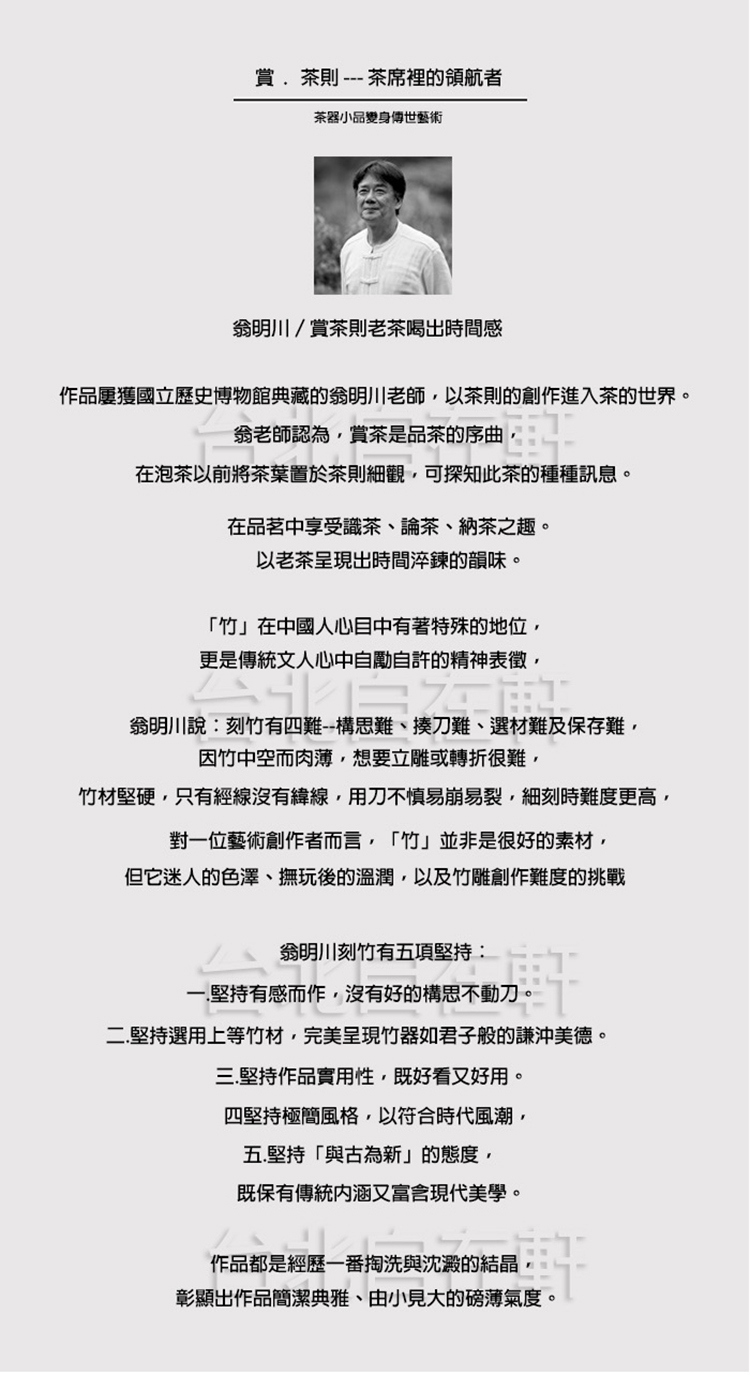
Weng Mingchuan/Appreciating tea, drinking old tea gives you a sense of time
Teacher Weng Mingchuan, whose works have been collected by the National Museum of History many times,
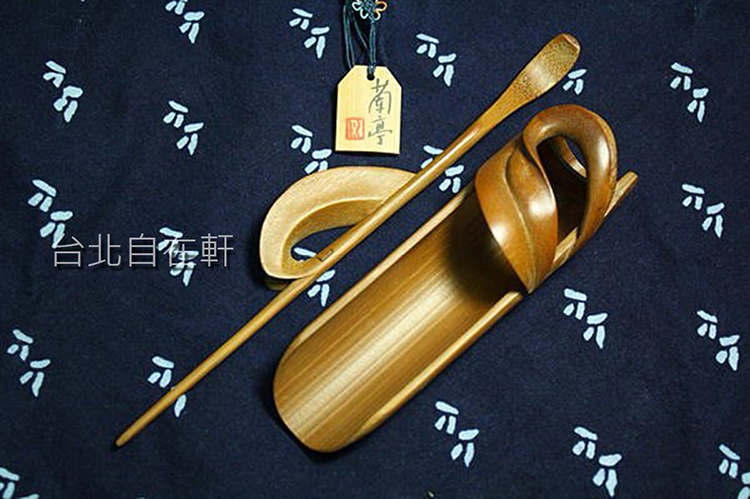
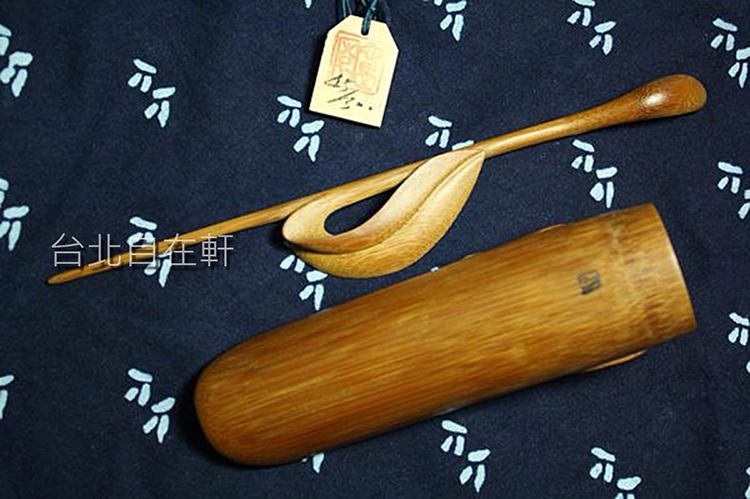
entered the world of tea with his creation of tea rules.
Teacher Weng believes that tea appreciation is the prelude to tea tasting
Before brewing tea, you can observe various information about the tea by placing it on the tea leaves.
Enjoy the fun of understanding tea, discussing tea, and enjoying tea while drinking tea.
The aged tea is used to present the charm quenched by time.
"Bamboo" has a special status in the hearts of Chinese people,
and it is also a spiritual symbol of self-motivation in the hearts of traditional literati.
Weng Mingchuan said: There are four difficulties in carving bamboo:
difficulty in conception, difficulty in cutting, difficulty in selecting materials,
and difficulty in preservation. Because bamboo is hollow and thin, it is difficult to carve upright or turn.
Bamboo is hard, with only warp and no weft.
It is easy to break and crack if you use a knife accidentally.
It is even more difficult to carve finely.
For an art creator, "bamboo" is not a very good material,
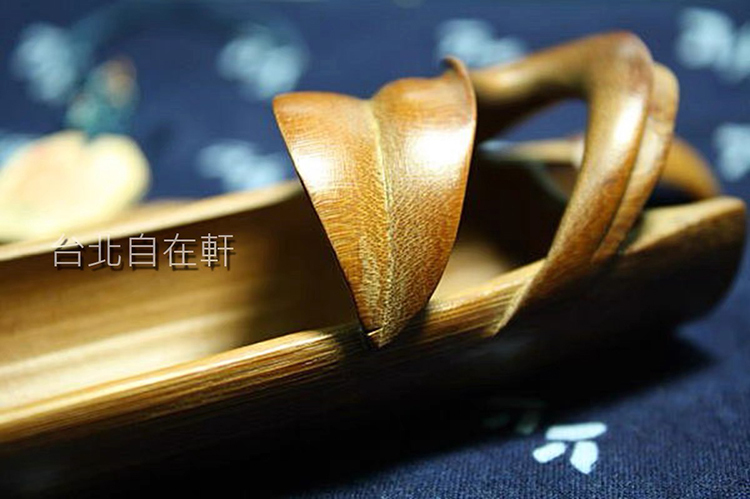
but its charming color, warmth after looking at it, and the difficulty of creating bamboo sculptures
Weng Mingchuan has five insistences on bamboo carving:
1. As long as you insist on doing what you feel, you won’t do anything if you don’t have a good idea.
2. Insist on using high-quality bamboo materials to perfectly present the modest virtues of bambooware like a gentleman.
3. Adhere to the practicality of the work, which is both beautiful and easy to use.
4. adheres to the minimalist style to conform to the trend of the times.
5. Adhere to the attitude of "making the old new", which not only retains the traditional connotation but is also rich in modern aesthetics.
The works are the crystallization of a lot of cleaning and precipitation,
showing the simplicity and elegance of the works, and the majestic magnanimity of the works from small to large.